Skip to main content‌

Plan your visit to Roman Colosseum

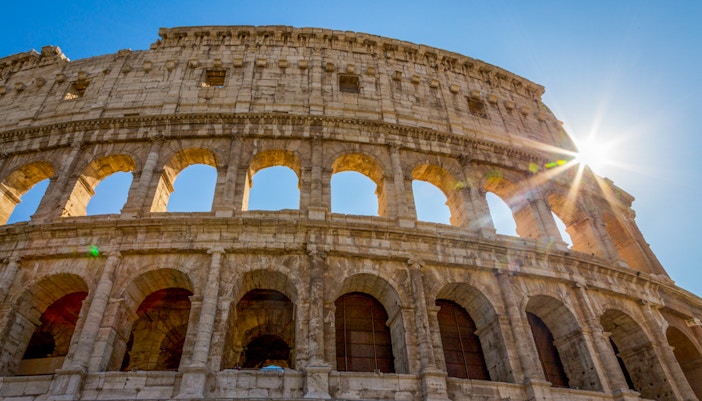
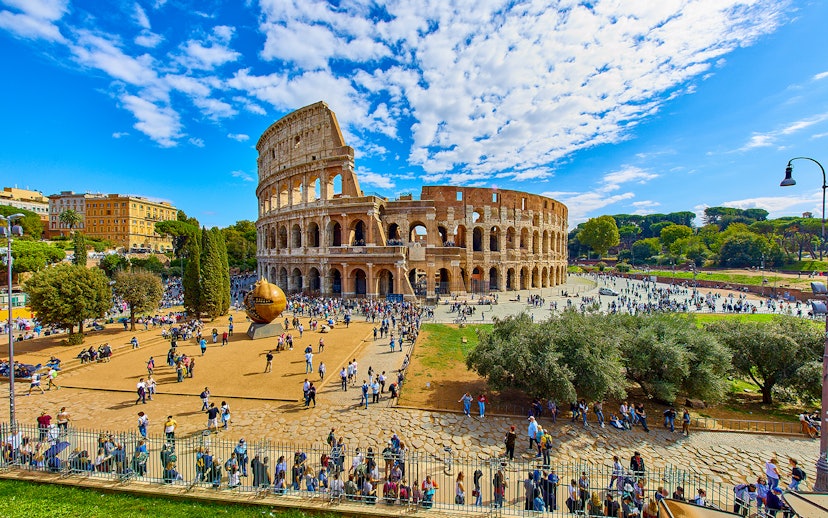
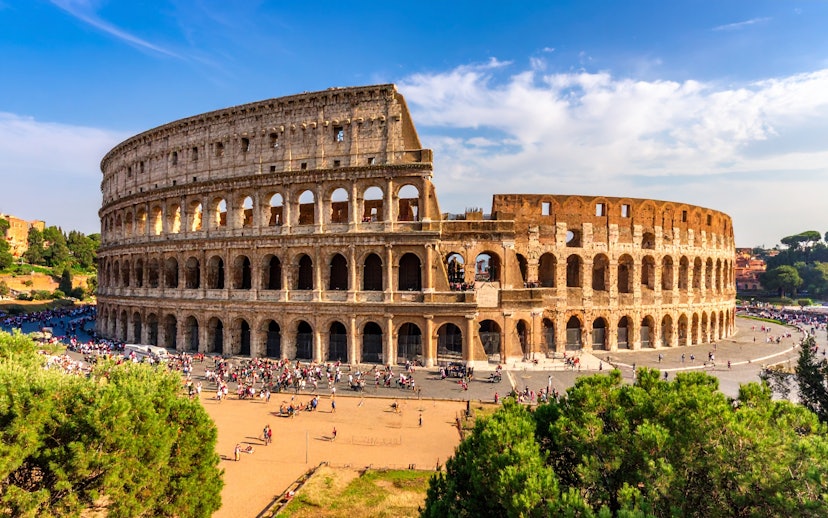
The Colosseum is Rome's most visited ancient monument, drawing over 12 million visitors annually to the wider archaeological park. Built in 70–80 AD and spanning about 24,000sqm, it is the largest amphitheatre ever constructed. Entry is timed and demand is high: on-site ticket queues stretch 60–90 minutes in June and July, and restricted areas like the underground are only accessible on guided tours with limited daily slots. This guide covers everything from choosing the right pass to knowing where to go once you are through the gate.

Colosseum at a glance

  • When to visit: Open daily from 8:30am. Last entry is 1 hour before closing, which runs from 4:30pm in winter to 7:15pm in late summer. Closed 25 December and 1 January.
  • Getting in: From for a standard timed-entry pass covering the Colosseum, Roman Forum, and Palatine Hill. Guided tours from ; underground access from . On-site queues run 60–90 minutes in June and July. Booking 2–3 weeks ahead is the baseline for April through October; 4–5 weeks for summer morning slots.
  • How long to allow: 1.5–2 hours for the Colosseum alone. Add 1.5–2 hours if you plan to walk the Roman Forum and Palatine Hill.
  • When to go: Before 9am or after 3pm on weekdays. Tuesday through Thursday are calmer than weekends.
  • What most people miss: The Colosseum Museum on the upper levels holds gladiatorial armour, inscriptions, and scale models that explain the arena's mechanics. Most visitors move through in five minutes; it is worth slowing down for 20.

🎟️ Underground and arena floor slots sell out 2 or more weeks ahead during June, July, and August. Lock in your preferred time before it goes.

​→ See ticket options

Where and when to go

How do you get to the Colosseum?

Address: Piazza del Colosseo, 1, 00184 Rome, Italy

The Colosseum sits in central Rome, between Monti, Celio, and the Roman Forum area, about 2 metro stops from Roma Termini. The most practical way to get here is by metro, as the Colosseo station is closest to the entrance zone.

  • By metro/train: Metro Line B to Colosseo or Line C to Colosseo-Fori Imperiali; 2–3-minute walk to Piazza del Colosseo.
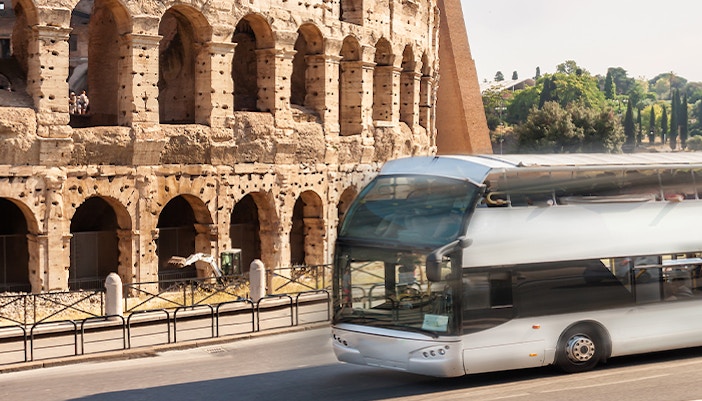
  • By bus/tram: Buses 51, 75, 81, 85, 87, 118 and tram 3 stop near Piazza del Colosseo.
  • By taxi/rideshare: 10–20 minutes from central Rome or Termini. Drop-off at Piazza del Colosseo or Via di San Gregorio; no direct access to the security entrance.
Step-by-step directions

Which entrance should you use?

The Colosseum has different access points depending on ticket type, and the most common mistake is walking around the monument looking for “any” open gate. Your pass type and time slot decide where you should queue.

  • Sperone Valadier Entrance: Main access point near Piazza del Colosseo; used for individual timed-entry and standard tickets; expect ~15–30 minutes wait depending on crowd levels.
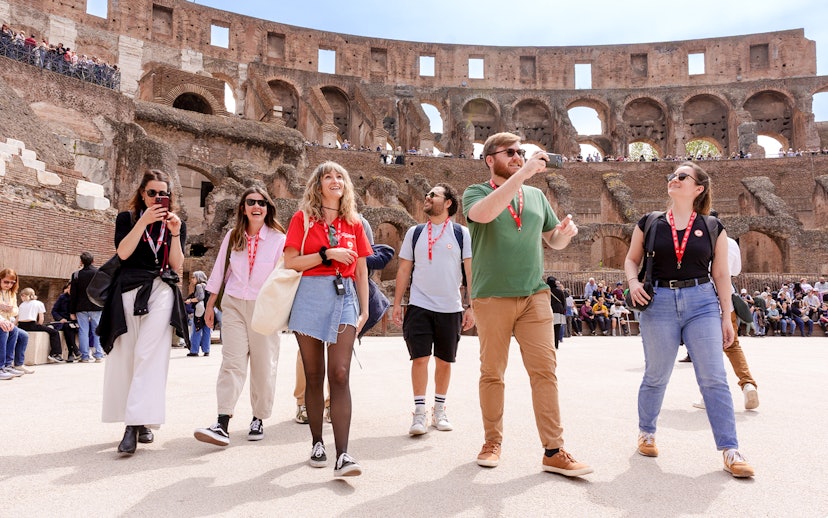
  • Group Gate: Located close to the main entrance zone; dedicated for guided tours and group entries; usually faster with ~10–25 minutes wait.
  • Stern Entrance: Situated on the Via di San Gregorio side; used for arena floor, underground, and special access tickets; typically ~10–20 minutes wait.
Full entrances guide

When is the Colosseum open?

  • Opening hours: 29 Mar–30 Sep: 8:30am–7:15pm; 1–24 Oct: closes 6:30pm (last entry 5:30pm); closed 25 Dec & 1 Jan; last entry usually 1 hour before closing.
  • Booking: Timed reservation required; tickets typically release ~30 days in advance.
  • Busiest time: Apr–Oct, especially 10am–2pm; also very crowded on free-entry days (first Sunday/month).
  • Best time to visit: 8:30am opening slot for minimal crowds; late afternoon as fallback (avoid midday peaks).
  • 💡 Pro tip: Do Colosseum first, then Forum & Palatine for better crowd flow and timing efficiency.
Check the complete Colosseum schedule

How to make the most of your time

Visit typeDurationRouteWalking distanceWhat you get

Highlights only

1–1.5 hrs

Colosseum ground level → panoramic upper tier

~1 km

A clear first understanding of why the Colosseum mattered, its scale, social hierarchy, and role as Rome’s most powerful stage for public life and spectacle.

Balanced visit

2.5–3.5 hrs

Colosseum → arena floor → upper tiers → Roman Forum → Palatine Hill

~2.5–3 km

A richer sense of how the games were experienced, from the perspectives of performers and spectators, while connecting entertainment to the rhythms of Roman civic life.

Full exploration

4-5+ hrs

Colosseum → underground → arena floor → upper tiers → Roman Forum → Palatine Hill

~4 km

A layered, narrative-driven understanding of ancient Rome; how engineering, politics, power, and performance came together to shape the empire’s most iconic symbol.

Know before booking your Colosseum tickets

Choosing the right Colosseum ticket comes down to how much time you have, how deeply you want to understand the site, and whether you prefer seamless entry or do not mind navigating queues and access rules.

  • Standard timed-entry passes (from ) include the Colosseum plus the Roman Forum and Palatine Hill, but on busy days same-day passes are often unavailable, and ticket lines can stretch 60–90 minutes in June and July. Pre-booking a timed slot is the baseline: it guarantees entry and avoids the risk of being turned away.
  • Guided tours (from €39) combine reserved entry with expert commentary across the Colosseum, Forum, and Palatine Hill, typically in small groups, making them a strong choice if you prefer structure and historical clarity without figuring out the route yourself.
  • For exclusive access, arena floor and underground tours (from €49/€135) unlock restricted zones with strict visitor caps and very limited availability, making advance booking essential.
  • Combo tickets (from €37) are most useful if you are also visiting high-demand sites like the Pantheon or Vatican Museums and want to lock in multiple entries with minimal planning.

​Jump to ticket comparison ↓

Colosseum access types explained

Access typeWhat's includedBest forPrice range

Standard access (timed)

Timed Colosseum entry + Roman Forum & Palatine Hill access, audio guide

Visiting independently when you want to move at your own pace and spend as long as you like in each area

From €23

Guided tour

Guided Colosseum, Forum & Palatine; small group; headsets

Visiting June through October when understanding the site and route matters as much as getting in, without spending hours reading every panel yourself

From €35

Underground & arena guided tour

Guided Underground + Arena Floor; very small groups

A dedicated visit where the engineering below the arena floor and the gladiatorial backstage story is the primary reason you are going

From €135

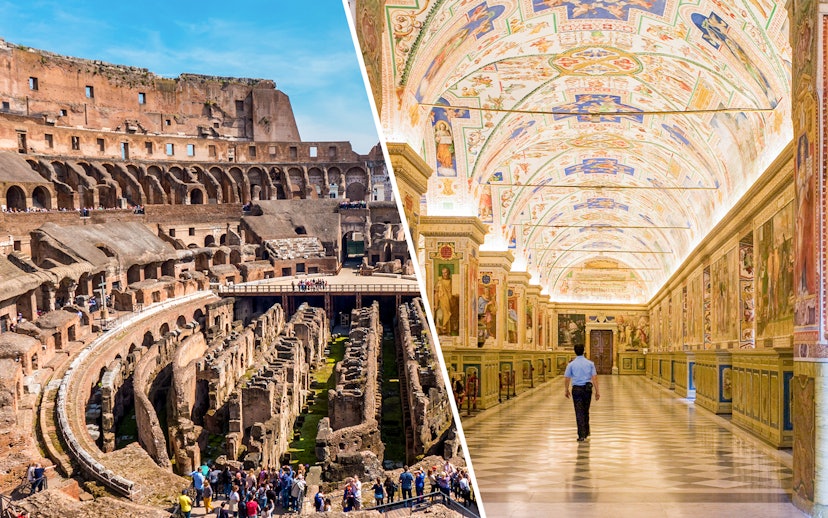
Combo: Colosseum + Pantheon / Vatican

Colosseum complex + major site entry or tour

A Rome trip that includes both the Colosseum and a second high-demand site, with both locked in through one booking

From €37

Forum & Palatine SUPER Sites Pass

Forum, Palatine + 7 restricted SUPER sites

Visiting the Forum and Palatine Hill without the Colosseum, or adding exclusive access to restricted SUPER sites on a return day

From €24

Explore the Colosseum

The Colosseum is more than just an ancient arena, it’s a complex of ruins, viewpoints, and stories waiting to be discovered.

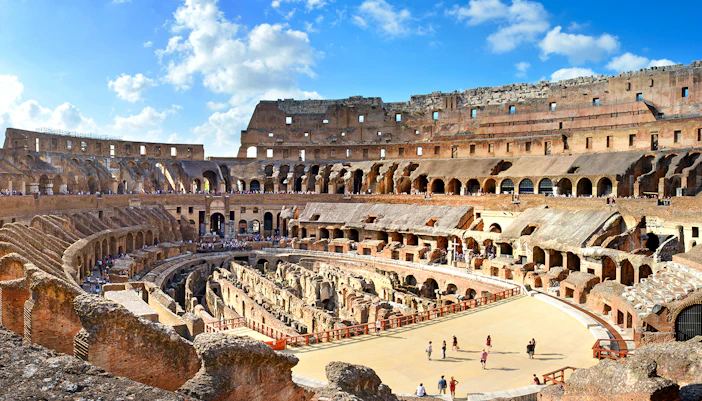
Upper tiers

Climb to the upper levels for panoramic views of the Colosseum interior and Rome beyond.

  • What to look out for: The steep angles and sightlines reveal how acoustics and visibility were optimized for massive crowds.
  • How to explore: Take breaks on the ascent and look down into the arena to fully grasp the scale of the structure.

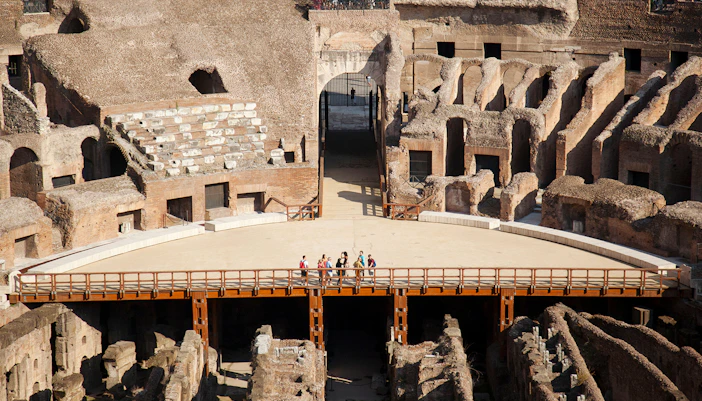
Arena Floor

Stand where gladiators once fought and look up at the tiers of seats that once held 50,000 spectators.

  • What to look out for: The contrast between the reconstructed wooden floor and exposed stone shows how performances were staged and controlled.
  • How to explore: Enter through the Gladiator’s Gate, pause near the center, and look upward to understand the seating hierarchy.
Step onto the Gladiators’ stage

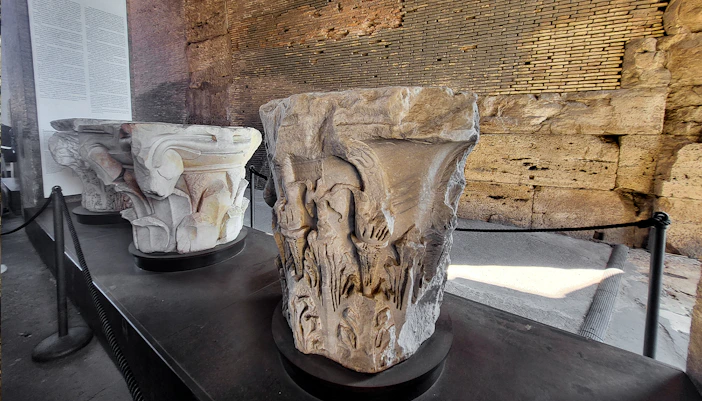
Colosseum Museum

Discover artifacts and exhibitions housed within the Colosseum’s upper levels.

  • What to look out for: Inscriptions, sculptures, and models explain how the games worked and how the monument evolved over centuries.
  • How to explore: Read selectively, focus on displays tied to what you’ve already seen below for clearer context and less information overload.
Explore the Colosseum Museum

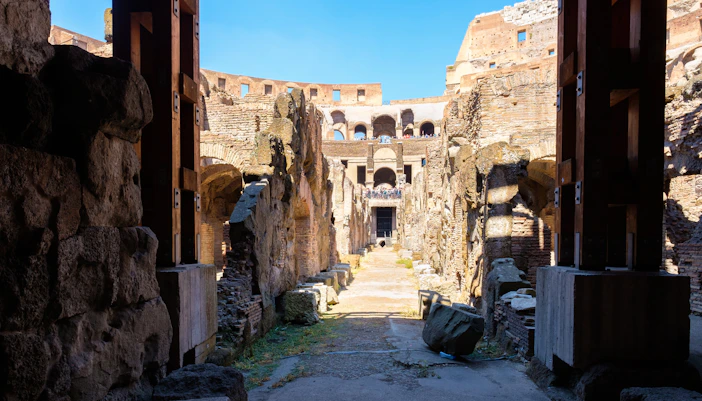
Underground Hypogeum

Descend into the labyrinth of tunnels and chambers where animals and fighters prepared for battle.

  • What to look out for: The remains of lifts, pulleys, and holding chambers reveal the sophisticated machinery behind Rome’s spectacles.
  • How to explore: Accessible only via special guided tours, follow its one-way route carefully, spaces are narrow, dim, and best appreciated at a slower pace.
See exclusive behind the scenes

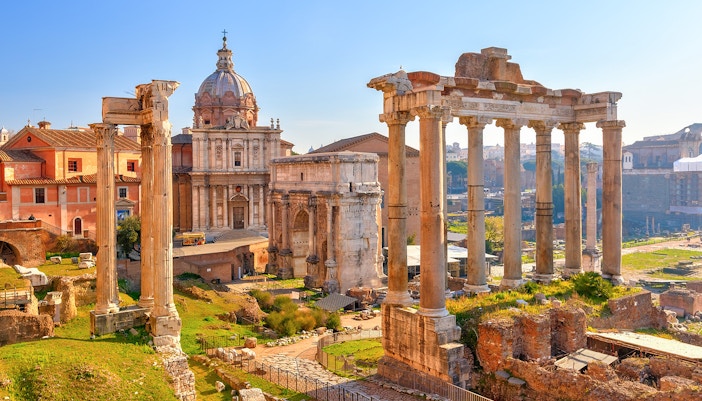
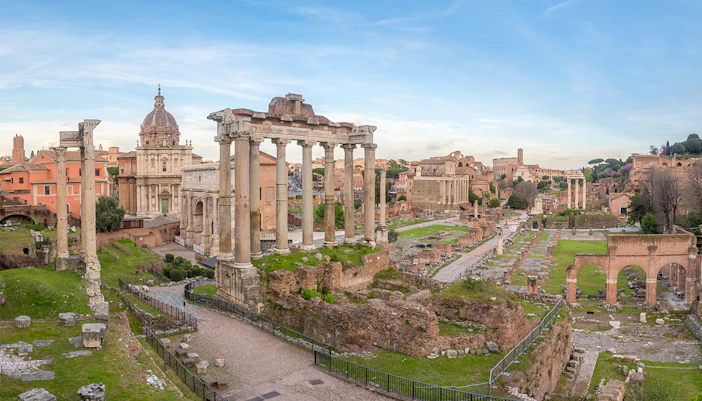
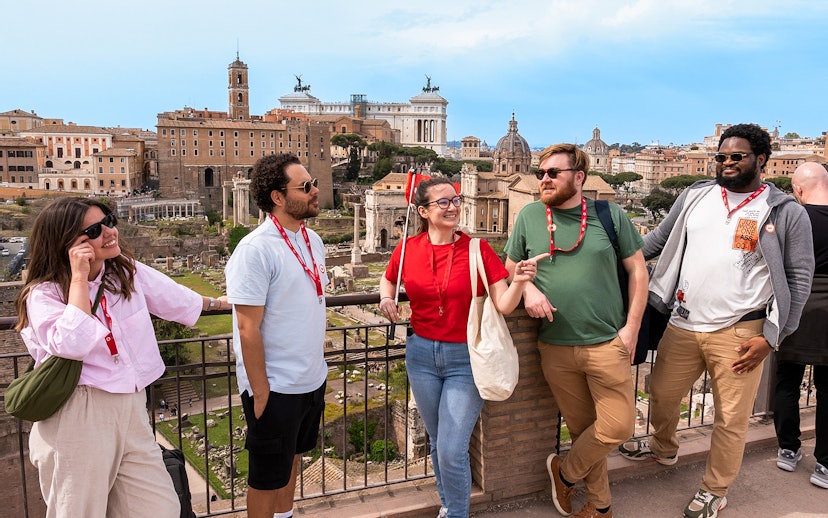
Roman Forum

Wander the political and social heart of ancient Rome, filled with temples, basilicas, and public spaces.

  • What to look out for: Layers of ruins from different eras show how Rome continuously rebuilt itself over centuries.
  • How to explore: Use major monuments as visual anchors and move at a steady pace over uneven stone pathways.
Walk through ancient Rome

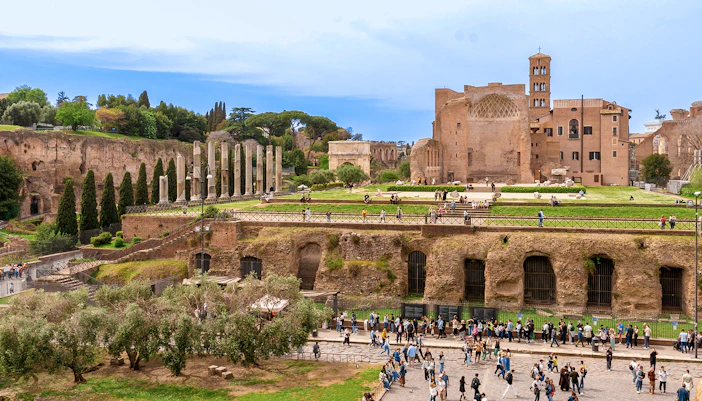
Palatine Hill

Explore the legendary birthplace of Rome and the sprawling remains of imperial palaces.

  • What to look out for: Vast palace complexes reflect the wealth and authority of emperors overlooking the city below.
  • How to explore: Move upward gradually from the Forum and pause at viewpoints facing the Circus Maximus.
Discover the birthplace of Rome

Facilities and accessibility

  • 🎧 Audio guides: Available as digital guides you can download to your phone, often offered as an upgrade with standard access options.
  • 🚻 Restrooms: Yes, there are toilets inside the Colosseum. There are 14 restrooms on the first tier, including accessible facilities with baby-changing stations, and additional restrooms on the second tier. Lines are common from late morning to midday but move quickly. These are the only facilities inside the building; plan a stop before crossing to the Roman Forum, where toilets are less centrally located.
  • 🎒 Bags and cloakroom: There is no cloakroom or luggage storage inside or outside the Colosseum. Large backpacks, suitcases, and bulky items are not permitted and must be left elsewhere before arrival. Luggage storage options are available in the Monti neighbourhood and near Termini station. [VERIFY: confirm specific storage services near the site]
  • 🛍️ Gift shops: Official souvenir shops selling books and replicas are located inside the Colosseum along exit routes.
  • 🍴 Food and drinks: No cafés or restaurants inside the monument. Snack bars and cafés are available just outside the Colosseum in the surrounding area.
  • 💧 Water and seating: Drinking fountains and benches are available within the wider archaeological area, including near the Forum and Palatine Hill.
  • ♿ Accessibility: Step-free access and elevators allow entry to select levels of the Colosseum; uneven terrain limits accessibility in parts of the Forum and Palatine Hill. Golf cart assistance is available within the wider Parco Archeologico for visitors using wheelchairs.

♿ Terrain & reachable areas

  • The ground floor and first tier of the Colosseum are accessible via ramps and elevators; upper tiers and the underground involve steep stairs and narrow passages.
  • Elevators connect key levels inside the Colosseum, but ancient stone floors and uneven surfaces are common throughout the site.
  • In the Roman Forum and Palatine Hill, accessibility improves on marked paths, though slopes and cobblestones can be challenging in places.

🏛️ General facilities

  • Visitors with disabilities and one companion enter free with valid ID can enter via a dedicated, step-free, and accessible gate at entrances.
  • Accessible restrooms are available at the ground floor of Colosseum and near major access points in the archaeological park.
  • Wheelchairs can be requested at main entrances, and assistance staff are available to help with navigation when needed.

🔊 Visual & hearing support

  • Audio guides include descriptive content suitable for visitors with visual impairments.
  • Tactile elements and explanatory panels are available along select accessible routes.
  • Sign-language guided tours and tailored assistance may be arranged in advance, subject to availability.
  • Stroller access: The ground floor and second level are accessible via elevators; upper tiers involve stairs and narrow passages.
  • Baby facilities: A dedicated Baby Pit Stop with changing and feeding space is located on the second level.
  • Restrooms: Family-accessible restrooms are available on the ground floor and first levels of the Colosseum.
  • Food breaks: Cafés and picnic-friendly open areas are located outside the Colosseum perimeter only.
  • Kids access: EU citizens under 18 enter free with valid ID but must still collect a ticket before entry.

Rules and restrictions

What you need to know before you go

  • Entry requirement: Timed entry is mandatory. Passes are nominative, so bring the same photo ID used at booking. Children and reduced-ticket holders may need proof of age or eligibility.
  • Bag policy: Only small bags and compact backpacks are allowed. Large luggage and wheeled suitcases are not permitted, and there are no cloakrooms. Travel light to speed up security.
  • Re-entry policy: No re-entry once you exit. If your pass includes the Roman Forum and Palatine Hill, plan your route in advance, as access to each area is controlled.

Not allowed

  • Bag & prohibited items: Large bags, backpacks, and suitcases are not allowed; only small bags or daypacks may be brought inside.
  • Other banned items include hiking poles, weapons, and aerosols. There is no cloakroom or luggage storage inside.
  • Food & drink: Eating and drinking are not permitted inside the Colosseum, except bottled water.
  • Smoking: Smoking, including e-cigarettes, is strictly prohibited throughout the site.
  • Animals: Pets are not allowed. Only certified service animals may enter, with proper documentation. Small dogs may be allowed in open areas of the Forum and Palatine Hill if carried in a suitable carrier, but not inside the Colosseum itself.

Photography

  • Personal photography is allowed in most public areas.
  • Flash, tripods, selfie sticks, drones, and commercial shoots without permission are not permitted.
  • Some restricted routes, such as underground, attic, or special-access areas, may have stricter staff instructions on the day.

Good to know

Rules can vary by ticket route. Arena, underground, attic, and night visits follow tighter access controls than standard first and second-level entry.

What else is worth visiting nearby?

Commonly paired with the Colosseum

Pantheon

Distance: About 1.8km, around 25 minutes on foot
Why people combine them: The Pantheon is the easiest Ancient Rome add-on after the Colosseum because it continues the Roman engineering story without needing a full museum visit. It also sits in the historic center, so you can naturally continue to Piazza Navona or Trevi Fountain afterward.

Know more

Vatican Museums

Distance: About 4km, around 20–30 minutes by taxi or 40–50 minutes by public transport
Why people combine them: This is the big “Rome in a day” pairing for travelers with limited time. It works best as a structured combo or guided full-day plan because both sites have timed entry, security checks, and heavy crowds.

Book now

Castel Sant’Angelo

Distance: About 3.5km, around 25–30 minutes by taxi or 45 minutes by public transport
Why people combine them: This works well if you are already heading toward the Vatican side of Rome. It gives you a fortress, papal history, rooftop views, and a less intense follow-up after the Colosseum.

Know more

Eat, shop and stay near Colosseum

  • Caffè Roma: Casual café just outside the Colosseum, ideal for quick bites, coffee, and light snacks. (5 min away)
  • RoYaL Art Cafè: Restaurant beside the Colosseum with rooftop seating and views, suitable for lunch, dinner, or drinks. (3min away)
  • Trattoria Luzzi: Traditional Roman trattoria about a 5-minute walk away, known for classic pasta, pizza, and local dishes. (6min away)
  • Il gelato di Costanza: Popular gelato spot nearby, perfect for a refreshing treat after your visit. (4min away)
  • Colosseum gift shop (exit hall): Books, replicas, and souvenirs themed around ancient Rome and the Colosseum.
  • Roman Forum bookshop: Located at the Forum entrance, with a focus on history and archaeology.

The Colosseum sits in the Monti neighborhood, a lively area with plenty of hotels, restaurants, and easy metro access. It’s a great base for exploring ancient Rome and the city center.

  • Hotel Capo d’Africa: 4★ boutique near the Colosseum and Roman Forum, often praised for location and rooftop terrace/breakfast space. (7min walk)
  • Mercure Roma Centro Colosseo: 4★ hotel very close to the Colosseum with a seasonal outdoor pool and terrace area. (6min walk)
  • Hotel Fori Imperiali Cavalieri: 3★, budget-friendly, highly walkable to the Colosseum and Forum. (6min away)

Practical tips

  • Reach the Colosseo metro area at least 30 minutes before your timed entry. Even with reserved access, security checks can build up late morning. The smoothest windows are usually before 9am or after 3pm, when tour-group pressure is lower.
  • If your pass includes the arena floor, check the access time as soon as you enter. Arena access can be tied to a fixed internal window, and if you miss it, staff may not let you back into that route later.
  • Do the Colosseum before the Roman Forum and Palatine Hill if your pass includes all three. The Forum and Palatine involve more walking, slopes, cobblestones, and exposed paths, so it is better to save your energy for that section instead of rushing through it at the end.
  • Travel light and refill your bottle before security. Large bags are not allowed, there are no cloakrooms, and re-entry is not permitted, so stepping out for water or food is not an option once your visit starts.
  • Bring headphones and a small power bank if you plan to use an audio guide or the official app. Signal can dip inside stone corridors, and battery drains faster when you are using maps, tickets, photos, and audio together.

Frequently asked questions about visiting the Colosseum

No, access to the Colosseum requires a ticket. EU and non-EU citizens under 18 enter free with valid ID but must still collect a free ticket before entry. All other visitors need a paid pass.